With an overall response rate of 70% at Day 28, RYONCIL is redefining what's possible in the treatment of pediatric patients with SR-aGvHD.2
Explore Efficacy
RYONCIL is the first and only FDA-approved allogeneic, off-the-shelf, cryopreserved bone marrow–derived MSC therapy specifically indicated for the treatment of SR-aGvHD in pediatric patients 2 months of age and older1,2 As an off-the-shelf cell therapy, RYONCIL works differently than other treatments to modulate immune response and mediate inflammation in SR-aGvHD.2-4

With an overall response rate of 70% at Day 28, RYONCIL is redefining what's possible in the treatment of pediatric patients with SR-aGvHD.2
Explore EfficacyRYONCIL is believed to be a cellular immunomodulator1,2,5
RYONCIL is believed to be a cellular immunomodulator that reduces inflammatory cytokine levels to help rebalance the immune system and lower the inflammation and cell damage associated with SR-aGvHD.2
RYONCIL works differently than a steroid2,4
The mechanism of action for RYONCIL is unclear but may be related to the immunomodulatory activities of culture-expanded MSCs.1,2 Data from in vitro studies demonstrate that MSCs inhibit T-cell activation as measured by proliferation and secretion of proinflammatory cytokines.2
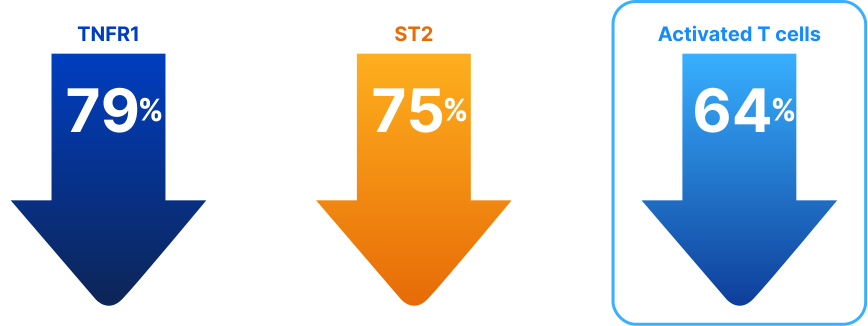
By suppressing activated T cells and proinflammatory cytokines, RYONCIL is thought to mediate systemic inflammation, cytotoxicity, and potential end-organ damage associated with aGvHD.2,6*
Human pharmacodynamic data were obtained from analysis of blood samples in pediatric patients with SR-aGvHD (n=40; age range 0.6-17 years) following treatment with RYONCIL at a dose of 2 x 10⁶ cells/kg.2


The immune characteristics of MSCs allow them to be used in the allogeneic setting between unrelated, HLA-unmatched donor and recipient.5
*The mechanism of action of RYONCIL is not entirely clear but may be related to immunomodulatory effects.
ƗAt baseline, elevated levels of TNFR1 and ST2 were observed consistent with the inflammatory state of aGvHD.

To start the process, download, print, and complete the MyMesoblast Starter Form‡ and fax it to 1-833-637-6008. To place an order, call the MyMesoblast patient services hub at 1-833-637-6007. ‡This is a nonbinding form for insurance benefit investigation and verification.
References: 1. US Food and Drug Administration. Summary Basis for Regulatory Action - RYONCIL. Published December 18, 2024. Accessed March 5, 2025. https://www.fda.gov/media/185192/download 2. RYONCIL (remestemcel-L-rknd) package insert. New York, NY: Mesoblast, Inc; 09/2025. 3. JAKAFI (ruxolitinib) package insert. Wilmington, DE: Incyte Corporation; 01/2023. 4. Abedin S, Hamadani M. Experimental pharmaceuticals for steroid-refractory acute graft-versus-host disease. J Exp Pharmacol. 2020;12:549-557. 5. Data on file. Mesoblast Ltd. Clinical study report MSB-GVHD001. 6. Data on file. Mesoblast Ltd. Integrated summary of safety.

RYONCIL is indicated for the treatment of steroid-refractory acute graft-versus-host disease (SR-aGvHD) in pediatric patients 2 months of age and older.
Important Safety InformationContraindications
Do not use RYONCIL in patients with known hypersensitivity to dimethyl sulfoxide (DMSO) or porcine and bovine proteins.
Hypersensitivity and Acute Infusion Reactions
Hypersensitivity reactions including acute infusion reactions have occurred with RYONCIL administration. Serious hypersensitivity reactions, including anaphylaxis, may occur due to DMSO and trace amounts of porcine or bovine proteins. Signs and symptoms may include fever, dyspnea, and hypotension during or after RYONCIL infusion.
Premedicate patients with antihistamine and corticosteroids and monitor closely for signs and symptoms of hypersensitivity or acute infusion reactions.
If a hypersensitivity or infusion reaction occurs, interrupt RYONCIL infusion. Do not administer RYONCIL in patients who experience serious or life-threatening reactions.
Transmission of Infectious Agents
Transmission of infectious disease or agents may occur with RYONCIL administration because it contains cells from human donors and is manufactured using human, porcine and bovine-derived reagents. Donors are screened and tested for Human Immune-deficiency Virus 1 (HIV-1); Human Immune-deficiency Virus 2 (HIV-2); Hepatitis B Virus (HBV); Hepatitis C Virus (HCV); Human T-cell Leukemia-lymphoma Virus 1 (HTLV-1); Human T-cell Leukemia-lymphoma Virus 2 (HTLV-2); West Nile Virus (WNV); Cytomegalovirus (CMV); Epstein-Barr Virus (EBV); and Syphilis (Treponema pallidum). Screening was performed for Creutzfeldt-Jakob disease (CJD) and communicable disease risks associated with xenotransplantation. RYONCIL cell banks are tested for human and animal viruses, retroviruses, bacteria, fungi, yeast, and mycoplasma. Human and animal-derived reagents are tested for human and animal viruses, bacteria, fungi, and mycoplasma before use. These measures do not eliminate the risk of transmitting these or other infectious diseases or agents.
Ectopic Tissue Formation
Ectopic tissue formation may occur following treatment with RYONCIL due to the ability of human mesenchymal stromal cells to differentiate into mesenchymal lineage cells such as bone, cartilage and fat cells.
ADVERSE REACTIONSClinical Trials Experience
Because clinical studies are conducted under widely varying conditions, adverse reaction rates observed in the clinical studies of a drug cannot be directly compared to rates in the clinical studies of another drug and may not reflect the rates observed in practice.
The safety data described in this section reflect exposure to RYONCIL in 54 patients in Study MSB-GVHD001 for the treatment of SR-aGvHD. Patients received intravenous infusion of RYONCIL at a dosage of 2 x 10⁶ MSCs/kg twice a week for four consecutive weeks, for a total of eight infusions. Patients with partial or mixed response at Day 28 received additional infusions of RYONCIL 2 x 10⁶ MSCs/kg once a week for an additional four weeks. The median number of doses administered were 10 (range 1 to 16), and the treatment was administered over a median of 43 days (range 1 to 104 days).
Serious adverse reactions occurred in 35 patients (65%) including pyrexia (n=5;9%), respiratory failure (n=5;9%), pneumatosis intestinalis (n=4;7%) and staphylococcal bacteremia (n=2;<5%). Eight patients had discontinuation of RYONCIL treatment due to the following: acute infusion reactions (n=3), hypotension (n=1), gastroenteritis (n=1), and death (n=3).
Adverse reactions ≤ grade 3 occurring in ≥10% of patients in Study MSB-GVHD001 up to day 100 after RYONCIL treatment included viral infectious disorders, bacterial infectious disorders, infections – pathogen unspecified, pyrexia, hemorrhage, abdominal pain, hypertension, vomiting, arrhythmia, diarrhea, rash, arthralgia, fungal infectious disorders, hypotension, cough and respiratory failure. No grade 4 or 5 adverse reactions occurred in the study.
Grade 3 or 4 laboratory abnormalities that worsened from baseline in ≥ 10% of patients in Study MSB-GVHD001 included elevated Gamma-glutamyl transferase, thrombocytopenia, and elevated bilirubin.
USE IN SPECIFIC POPULATIONSPregnancy
There are no available data for RYONCIL use in pregnant women. No animal reproductive and developmental toxicity studies have been conducted with RYONCIL to assess whether it can cause fetal harm when administered to a pregnant woman. It is not known if RYONCIL has the potential to be transferred to the fetus. Therefore, RYONCIL is not recommended for women who are pregnant. In the U.S. general population, the estimated background risk of major birth defects and miscarriage in clinically recognized pregnancies is 2-4% and 10-20%, respectively.
Lactation
There is no information regarding the presence of RYONCIL in human milk, the effect on the breastfed infant, and the effects on milk production. The developmental and health benefits of breastfeeding should be considered along with the mother’s clinical need for RYONCIL and any potential adverse effects on the breastfed infant from RYONCIL or from the underlying maternal condition.
You may report side effects to the FDA at 1-800-FDA-1088 or www.fda.gov/medwatch. You may also report side effects to Mesoblast at toll-free phone #1-844-889-MESO (6376)
Please see the RYONCIL full Prescribing Information for additional Important Safety Information.
RYONCIL is indicated for the treatment of steroid-refractory acute graft-versus-host disease (SR-aGvHD) in pediatric patients 2 months of age and older.
Important Safety InformationContraindications
Do not use RYONCIL in patients with known hypersensitivity to dimethyl sulfoxide (DMSO) or porcine and bovine proteins.
WARNINGS AND PRECAUTIONSHypersensitivity and Acute Infusion Reactions
Hypersensitivity reactions including acute infusion reactions have occurred with RYONCIL administration. Serious hypersensitivity reactions, including anaphylaxis, may occur due to DMSO and trace amounts of porcine or bovine proteins. Signs and symptoms may include fever, dyspnea, and hypotension during or after RYONCIL infusion.
Premedicate patients with antihistamine and corticosteroids and monitor closely for signs and symptoms of hypersensitivity or acute infusion reactions.
If a hypersensitivity or infusion reaction occurs, interrupt RYONCIL infusion. Do not administer RYONCIL in patients who experience serious or life-threatening reactions.
Transmission of Infectious Agents
Transmission of infectious disease or agents may occur with RYONCIL administration because it contains cells from human donors and is manufactured using human, porcine and bovine-derived reagents. Donors are screened and tested for Human Immune-deficiency Virus 1 (HIV-1); Human Immune-deficiency Virus 2 (HIV-2); Hepatitis B Virus (HBV); Hepatitis C Virus (HCV); Human T-cell Leukemia-lymphoma Virus 1 (HTLV-1); Human T-cell Leukemia-lymphoma Virus 2 (HTLV-2); West Nile Virus (WNV); Cytomegalovirus (CMV); Epstein-Barr Virus (EBV); and Syphilis (Treponema pallidum). Screening was performed for Creutzfeldt-Jakob disease (CJD) and communicable disease risks associated with xenotransplantation. RYONCIL cell banks are tested for human and animal viruses, retroviruses, bacteria, fungi, yeast, and mycoplasma. Human and animal-derived reagents are tested for human and animal viruses, bacteria, fungi, and mycoplasma before use. These measures do not eliminate the risk of transmitting these or other infectious diseases or agents.
Ectopic Tissue Formation
Ectopic tissue formation may occur following treatment with RYONCIL due to the ability of human mesenchymal stromal cells to differentiate into mesenchymal lineage cells such as bone, cartilage and fat cells.
ADVERSE REACTIONSClinical Trials Experience
Because clinical studies are conducted under widely varying conditions, adverse reaction rates observed in the clinical studies of a drug cannot be directly compared to rates in the clinical studies of another drug and may not reflect the rates observed in practice.
The safety data described in this section reflect exposure to RYONCIL in 54 patients in Study MSB-GVHD001 for the treatment of SR-aGvHD. Patients received intravenous infusion of RYONCIL at a dosage of 2 x 10⁶ MSCs/kg twice a week for four consecutive weeks, for a total of eight infusions. Patients with partial or mixed response at Day 28 received additional infusions of RYONCIL 2 x 10⁶ MSCs/kg once a week for an additional four weeks. The median number of doses administered were 10 (range 1 to 16), and the treatment was administered over a median of 43 days (range 1 to 104 days).
Serious adverse reactions occurred in 35 patients (65%) including pyrexia (n=5;9%), respiratory failure (n=5;9%), pneumatosis intestinalis (n=4;7%) and staphylococcal bacteremia (n=2;<5%). Eight patients had discontinuation of RYONCIL treatment due to the following: acute infusion reactions (n=3), hypotension (n=1), gastroenteritis (n=1), and death (n=3).
Adverse reactions ≤ grade 3 occurring in ≥10% of patients in Study MSB-GVHD001 up to day 100 after RYONCIL treatment included viral infectious disorders, bacterial infectious disorders, infections – pathogen unspecified, pyrexia, hemorrhage, abdominal pain, hypertension, vomiting, arrhythmia, diarrhea, rash, arthralgia, fungal infectious disorders, hypotension, cough and respiratory failure. No grade 4 or 5 adverse reactions occurred in the study.
Grade 3 or 4 laboratory abnormalities that worsened from baseline in ≥ 10% of patients in Study MSB-GVHD001 included elevated Gamma-glutamyl transferase, thrombocytopenia, and elevated bilirubin.
USE IN SPECIFIC POPULATIONSPregnancy
There are no available data for RYONCIL use in pregnant women. No animal reproductive and developmental toxicity studies have been conducted with RYONCIL to assess whether it can cause fetal harm when administered to a pregnant woman. It is not known if RYONCIL has the potential to be transferred to the fetus. Therefore, RYONCIL is not recommended for women who are pregnant. In the U.S. general population, the estimated background risk of major birth defects and miscarriage in clinically recognized pregnancies is 2-4% and 10-20%, respectively.
Lactation
There is no information regarding the presence of RYONCIL in human milk, the effect on the breastfed infant, and the effects on milk production. The developmental and health benefits of breastfeeding should be considered along with the mother’s clinical need for RYONCIL and any potential adverse effects on the breastfed infant from RYONCIL or from the underlying maternal condition.
You may report side effects to the FDA at 1-800-FDA-1088 or www.fda.gov/medwatch. You may also report side effects to Mesoblast at toll-free phone #1-844-889-MESO (6376)
Please see the RYONCIL full Prescribing Information for additional Important Safety Information.

