For US Healthcare Professionals
Order RYONCILSign up for product updates

Consider the critical challenges of pediatric steroid-refractory acute graft-versus-host disease (SR-aGvHD)

About half of patients with aGvHD will not respond to steroids1

aGvHD is a serious and life-threatening complication in pediatric patients following allogenic hematopoietic stem cell transplant (HSCT).1,2

10.6%

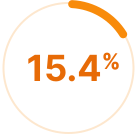
Of the 47,499 allogeneic HSCTs performed in the United States and reported to the Center for International Blood and Marrow Transplant Research (CIBMTR) between 2019 and 2023, 15.4% (7,278) were pediatric patients3

50%

About half of all patients who develop aGvHD (Grade II and above) are refractory to first-line treatment with steroids, and are considered steroid-refractory1*

70%

The prognosis of pediatric SR-aGvHD is poor, with high mortality rates1,4†

steroid refractory icon

About half of pediatric patients with aGvHD become steroid refractory1*

Difficult to treat

SR-aGvHD is especially difficult to treat in patients with more severe disease and is associated with:5-10

Poor prognosis iconPoor prognosis
Poor long-term outcomes iconPoor long-term outcomes
High hospital readmissions iconHigh hospital readmission rates
High mortality rates iconHigh mortality rates

Donor-derived, alloreactive T cells play a central role in the pathogenesis of GvHD11

aGvHD primarily involves 3 target organs: gastrointestinal tract (GI), liver, and skin2,12

aGvHD occurs when alloreactive donor-derived T cells within the donated tissue (graft) trigger an immunological response, and alloreactive donor-derived T cells play a role in mediating the systemic inflammation, cytotoxicity, and potential end-organ damage associated with aGvHD.11

GI tract
GI tract

View symptoms

Upper and/or lower GI tract manifestations8,12
Diarrhea

May be as severe as several liters of stool per day

Other GI symptoms include: 
  • Anorexia with weight loss 
  • GI bleeding/blood in the stool
  • Nausea
  • Vomiting
  • Severe pain
  • GI atony
Liver
Liver

View symptoms

Hyperbilirubinemia due to cholestatic jaundice8,12
Often has no symptoms

Can only be identified by blood tests

Acute liver GvHD can appear as jaundice and inability to excrete bilirubin
Other symptoms may include: 

Liver failure with symptoms of bleeding, confusion, or ascites  

Skin
Skin

View symptoms

Inflammatory maculopapular erythematous skin rash8,12
May begin with faint redness 
  • Can appear anywhere on body 
  • May appear on the palms of hands and/or soles of feet 
May spread, eventually covering the entire body 
  • Mild case: may be sore or itchy; may appear like a minor sunburn 
  • Severe case: may include blistering or peeling skin 

Your pediatric patients with SR-aGvHD deserve a proven path forward 

Corticosteroids are first-line standard of care but not all patients will respond.6-9

Treatment Limitations iconTreatment Limitations

First-line treatment includes use of steroids in addition to continuation of drugs used for GvHD prophylaxis and gradual tapering of steroids in responders2

About half of pediatric patients with aGvHD become steroid refractory.1*

Prognosis iconPrognosis

The prognosis of pediatric SR-aGvHD is poor, with high mortality rates1,4†

Checkmark

Before RYONCIL, no FDA-approved SR-aGvHD treatment options were indicated for pediatric patients 2 months of age and older, and no approved options were available for patients under 12 years of age.2,11

*SR-aGvHD was defined as progression of aGvHD within 3 to 5 days of first-line therapy initiation with >2 mg/kg/day of prednisone or failure to improve within 5 to 7 days after treatment initiation or incomplete response after more than 28 days of immunosuppressive treatment including steroids, according to the European Group for Blood and Marrow Transplantation National Institutes of Health CIBMTR Task Force position statement.

†According to a retrospective nationwide multicenter cohort study of 81 patients 0 to 18 years old with SR-aGvHD who underwent transplantation between 2010 and 2020.

References: 1. Verbeek AB, Jansen SA, von Asmuth EGJ, et al. Clinical features, treatment, and outcome of pediatric steroid-refractory acute graft-versus-host disease: a multicenter study. Transplant Cell Ther. 2022;28(9):600.e1–600.e9. 2. US Food and Drug Administration. Summary Basis for Regulatory Action - RYONCIL. Published December 18, 2024. Accessed March 5, 2025. https://www.fda.gov/media/185192/download 3. US Department of Health and Human Services. Health Resources & Services Administration. Transplant activity report. Last reviewed July 2025. Accessed August 20, 2025. https://bloodstemcell.hrsa.gov/sites/default/files/bloodstemcell/data/transplant-activity/transplants-year-age-group.xlsx 4. Luo C, Huang X, Wei L, et al. Second-line therapy for patients with steroid-refractory aGVHD: systematic review and meta-analysis of randomized controlled trials. Front Immunol. 2023;14:1211171. 5. Rashidi A, DeFor TE, Holtan SG, Blazar BR, Weisdorf DJ, MacMillan ML. Outcomes and predictors of response in steroid-refractory acute graft-versus-host disease: single-center results from a cohort of 203 patients. Biol Blood Marrow Transplant. 6. Axt L, Naumann A, Toennies J, et al. Retrospective single center analysis of outcome, risk factors and therapy in steroid refractory graft-versus-host disease after allogeneic hematopoietic cell transplantation. Bone Marrow Transplant. 2019;54(11):1805-1814. 2019;25(11):2297-2302. 7. Martin PJ, Rizzo JD, Wingard JR, et al. First- and second-line systemic treatment of acute graft-versus-host disease: recommendations of the American Society of Blood and Marrow Transplantation. Biol Blood Marrow Transplant. 2012;18(8):1150-1163. 8. Leukemia & Lymphoma Society. Graft-versus-host disease. Accessed May 21, 2025. https://lls.org/treatment/types-treatment/stem-cell-transplantation/graft-versus-host-disease 9. MacMillan ML, DeFor TE, Weisdorf DJ. What predicts high risk acute graft-versus-host disease (GVHD) at onset? identification of those at highest risk by a novel acute GVHD risk score. Br J Haematol. 2012;157(6):732-741. 10. Holtan S, Yu J, Paranagama D, et al. Disease progression, hospital readmissions, and clinical outcomes for patients with steroid-refractory acute graft-versus-host disease: a multicenter, retrospective study. Bone Marrow Transplant. 2022;57(9):1399-1404. 11. RYONCIL (remestemcel-L-rknd) package insert. New York, NY: Mesoblast, Inc; 09/2025. 12. Schoemans HM, Lee SJ, Ferrara JL, et al; for the EBMT Transplant Complications Working Party and the EBMT−NIH−CIBMTR GvHD Task Force. EBMT–NIH–CIBMTR Task Force position statement on standardized terminology & guidance for graft-versus-host disease assessment. Bone Marrow Transplant. 2018;53(11):1401-1415.

expand/collapse
INDICATION

RYONCIL is indicated for the treatment of steroid-refractory acute graft-versus-host disease (SR-aGvHD) in pediatric patients 2 months of age and older.

Important Safety Information

Contraindications

Do not use RYONCIL in patients with known hypersensitivity to dimethyl sulfoxide (DMSO) or porcine and bovine proteins.

WARNINGS AND PRECAUTIONS

Hypersensitivity and Acute Infusion Reactions

Hypersensitivity reactions including acute infusion reactions have occurred with RYONCIL administration. Serious hypersensitivity reactions, including anaphylaxis, may occur due to DMSO and trace amounts of porcine or bovine proteins. Signs and symptoms may include fever, dyspnea, and hypotension during or after RYONCIL infusion.

Premedicate patients with antihistamine and corticosteroids and monitor closely for signs and symptoms of hypersensitivity or acute infusion reactions.

If a hypersensitivity or infusion reaction occurs, interrupt RYONCIL infusion. Do not administer RYONCIL in patients who experience serious or life-threatening reactions.

Transmission of Infectious Agents

Transmission of infectious disease or agents may occur with RYONCIL administration because it contains cells from human donors and is manufactured using human, porcine and bovine-derived reagents. Donors are screened and tested for Human Immune-deficiency Virus 1 (HIV-1); Human Immune-deficiency Virus 2 (HIV-2); Hepatitis B Virus (HBV); Hepatitis C Virus (HCV); Human T-cell Leukemia-lymphoma Virus 1 (HTLV-1); Human T-cell Leukemia-lymphoma Virus 2 (HTLV-2); West Nile Virus (WNV); Cytomegalovirus (CMV); Epstein-Barr Virus (EBV); and Syphilis (Treponema pallidum). Screening was performed for Creutzfeldt-Jakob disease (CJD) and communicable disease risks associated with xenotransplantation. RYONCIL cell banks are tested for human and animal viruses, retroviruses, bacteria, fungi, yeast, and mycoplasma. Human and animal-derived reagents are tested for human and animal viruses, bacteria, fungi, and mycoplasma before use. These measures do not eliminate the risk of transmitting these or other infectious diseases or agents.

Ectopic Tissue Formation

Ectopic tissue formation may occur following treatment with RYONCIL due to the ability of human mesenchymal stromal cells to differentiate into mesenchymal lineage cells such as bone, cartilage and fat cells.

ADVERSE REACTIONS

Clinical Trials Experience

Because clinical studies are conducted under widely varying conditions, adverse reaction rates observed in the clinical studies of a drug cannot be directly compared to rates in the clinical studies of another drug and may not reflect the rates observed in practice.

The safety data described in this section reflect exposure to RYONCIL in 54 patients in Study MSB-GVHD001 for the treatment of SR-aGvHD. Patients received intravenous infusion of RYONCIL at a dosage of 2 x 10⁶ MSCs/kg twice a week for four consecutive weeks, for a total of eight infusions. Patients with partial or mixed response at Day 28 received additional infusions of RYONCIL 2 x 10⁶ MSCs/kg once a week for an additional four weeks. The median number of doses administered were 10 (range 1 to 16), and the treatment was administered over a median of 43 days (range 1 to 104 days).

Serious adverse reactions occurred in 35 patients (65%) including pyrexia (n=5;9%), respiratory failure (n=5;9%), pneumatosis intestinalis (n=4;7%) and staphylococcal bacteremia (n=2;<5%). Eight patients had discontinuation of RYONCIL treatment due to the following: acute infusion reactions (n=3), hypotension (n=1), gastroenteritis (n=1), and death (n=3).

Adverse reactions ≤ grade 3 occurring in ≥10% of patients in Study MSB-GVHD001 up to day 100 after RYONCIL treatment included viral infectious disorders, bacterial infectious disorders, infections – pathogen unspecified, pyrexia, hemorrhage, abdominal pain, hypertension, vomiting, arrhythmia, diarrhea, rash, arthralgia, fungal infectious disorders, hypotension, cough and respiratory failure. No grade 4 or 5 adverse reactions occurred in the study.

Grade 3 or 4 laboratory abnormalities that worsened from baseline in ≥ 10% of patients in Study MSB-GVHD001 included elevated Gamma-glutamyl transferase, thrombocytopenia, and elevated bilirubin.

USE IN SPECIFIC POPULATIONS

Pregnancy

There are no available data for RYONCIL use in pregnant women. No animal reproductive and developmental toxicity studies have been conducted with RYONCIL to assess whether it can cause fetal harm when administered to a pregnant woman. It is not known if RYONCIL has the potential to be transferred to the fetus. Therefore, RYONCIL is not recommended for women who are pregnant. In the U.S. general population, the estimated background risk of major birth defects and miscarriage in clinically recognized pregnancies is 2-4% and 10-20%, respectively.

Lactation

There is no information regarding the presence of RYONCIL in human milk, the effect on the breastfed infant, and the effects on milk production. The developmental and health benefits of breastfeeding should be considered along with the mother’s clinical need for RYONCIL and any potential adverse effects on the breastfed infant from RYONCIL or from the underlying maternal condition.

You may report side effects to the FDA at 1-800-FDA-1088 or www.fda.gov/medwatch. You may also report side effects to Mesoblast at toll-free phone #1-844-889-MESO (6376)

Please see the RYONCIL full Prescribing Information for additional Important Safety Information.

INDICATION

RYONCIL is indicated for the treatment of steroid-refractory acute graft-versus-host disease (SR-aGvHD) in pediatric patients 2 months of age and older.

Important Safety Information

Contraindications

Do not use RYONCIL in patients with known hypersensitivity to dimethyl sulfoxide (DMSO) or porcine and bovine proteins.

WARNINGS AND PRECAUTIONS

Hypersensitivity and Acute Infusion Reactions

Hypersensitivity reactions including acute infusion reactions have occurred with RYONCIL administration. Serious hypersensitivity reactions, including anaphylaxis, may occur due to DMSO and trace amounts of porcine or bovine proteins. Signs and symptoms may include fever, dyspnea, and hypotension during or after RYONCIL infusion.

Premedicate patients with antihistamine and corticosteroids and monitor closely for signs and symptoms of hypersensitivity or acute infusion reactions.

If a hypersensitivity or infusion reaction occurs, interrupt RYONCIL infusion. Do not administer RYONCIL in patients who experience serious or life-threatening reactions.

Transmission of Infectious Agents

Transmission of infectious disease or agents may occur with RYONCIL administration because it contains cells from human donors and is manufactured using human, porcine and bovine-derived reagents. Donors are screened and tested for Human Immune-deficiency Virus 1 (HIV-1); Human Immune-deficiency Virus 2 (HIV-2); Hepatitis B Virus (HBV); Hepatitis C Virus (HCV); Human T-cell Leukemia-lymphoma Virus 1 (HTLV-1); Human T-cell Leukemia-lymphoma Virus 2 (HTLV-2); West Nile Virus (WNV); Cytomegalovirus (CMV); Epstein-Barr Virus (EBV); and Syphilis (Treponema pallidum). Screening was performed for Creutzfeldt-Jakob disease (CJD) and communicable disease risks associated with xenotransplantation. RYONCIL cell banks are tested for human and animal viruses, retroviruses, bacteria, fungi, yeast, and mycoplasma. Human and animal-derived reagents are tested for human and animal viruses, bacteria, fungi, and mycoplasma before use. These measures do not eliminate the risk of transmitting these or other infectious diseases or agents.

Ectopic Tissue Formation

Ectopic tissue formation may occur following treatment with RYONCIL due to the ability of human mesenchymal stromal cells to differentiate into mesenchymal lineage cells such as bone, cartilage and fat cells.

ADVERSE REACTIONS

Clinical Trials Experience

Because clinical studies are conducted under widely varying conditions, adverse reaction rates observed in the clinical studies of a drug cannot be directly compared to rates in the clinical studies of another drug and may not reflect the rates observed in practice.

The safety data described in this section reflect exposure to RYONCIL in 54 patients in Study MSB-GVHD001 for the treatment of SR-aGvHD. Patients received intravenous infusion of RYONCIL at a dosage of 2 x 10⁶ MSCs/kg twice a week for four consecutive weeks, for a total of eight infusions. Patients with partial or mixed response at Day 28 received additional infusions of RYONCIL 2 x 10⁶ MSCs/kg once a week for an additional four weeks. The median number of doses administered were 10 (range 1 to 16), and the treatment was administered over a median of 43 days (range 1 to 104 days).

Serious adverse reactions occurred in 35 patients (65%) including pyrexia (n=5;9%), respiratory failure (n=5;9%), pneumatosis intestinalis (n=4;7%) and staphylococcal bacteremia (n=2;<5%). Eight patients had discontinuation of RYONCIL treatment due to the following: acute infusion reactions (n=3), hypotension (n=1), gastroenteritis (n=1), and death (n=3).

Adverse reactions ≤ grade 3 occurring in ≥10% of patients in Study MSB-GVHD001 up to day 100 after RYONCIL treatment included viral infectious disorders, bacterial infectious disorders, infections – pathogen unspecified, pyrexia, hemorrhage, abdominal pain, hypertension, vomiting, arrhythmia, diarrhea, rash, arthralgia, fungal infectious disorders, hypotension, cough and respiratory failure. No grade 4 or 5 adverse reactions occurred in the study.

Grade 3 or 4 laboratory abnormalities that worsened from baseline in ≥ 10% of patients in Study MSB-GVHD001 included elevated Gamma-glutamyl transferase, thrombocytopenia, and elevated bilirubin.

USE IN SPECIFIC POPULATIONS

Pregnancy

There are no available data for RYONCIL use in pregnant women. No animal reproductive and developmental toxicity studies have been conducted with RYONCIL to assess whether it can cause fetal harm when administered to a pregnant woman. It is not known if RYONCIL has the potential to be transferred to the fetus. Therefore, RYONCIL is not recommended for women who are pregnant. In the U.S. general population, the estimated background risk of major birth defects and miscarriage in clinically recognized pregnancies is 2-4% and 10-20%, respectively.

Lactation

There is no information regarding the presence of RYONCIL in human milk, the effect on the breastfed infant, and the effects on milk production. The developmental and health benefits of breastfeeding should be considered along with the mother’s clinical need for RYONCIL and any potential adverse effects on the breastfed infant from RYONCIL or from the underlying maternal condition.

You may report side effects to the FDA at 1-800-FDA-1088 or www.fda.gov/medwatch. You may also report side effects to Mesoblast at toll-free phone #1-844-889-MESO (6376)

Please see the RYONCIL full Prescribing Information for additional Important Safety Information.